


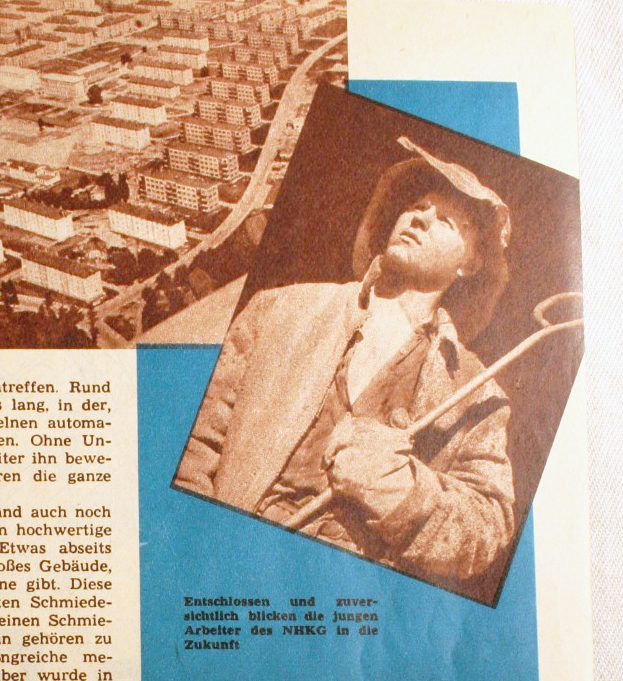
While making my way through The Wende Museum’s magazine collection recently, I happened upon Jugend und Technique (Youth and Technology), a Popular Science for East Germany’s up-and-coming youth. The magazine’s stock in trade seems to have been the latest in socialist technology chic—impressive-looking factories, large-scale dams, young workers at the ready, etc.—while its readership was no doubt conceived to be as determined, confident and future-oriented as this young iron worker; the very model of a modern, Soviet-style worker.
[To be fair, the West was equally interested in encouraging its young to take up the banner of modern technology, especially if such “progress” allowed governments even the teensiest of Cold War bragging rights.]
Cover shot?
Although this particular rocket-in-motion references a short story in the magazine (“The Three Suns,” a science-fiction narrative translated from the original Czechoslovakian), it is hardly surprising to see space travel front and center in January 1957’s edition of Jugend und Technique. Laika, famously the first dog to go into space, would be launched later that year, and a scant four years after that, Yuri Gagarin would get his chance to become the first man to orbit the Earth. The space race was more than on, and with it came a boatload of propaganda and a veritable tidal wave of popular interest. Indeed, The Wende Museum has a lovely installation demonstrating the centrality of space exploration in the pre-Wende East’s popular imagination, the highlights of which—for me, at least—include:
#2
The Space Exploration Stamp Collection = Yuri Gagarin, the first human in space, 1961 (but of course); Laika, the first dog in space, 1957 (poor puppy); Mongolia, the DDR, Cuba—oh my!
#10
A poster from 1961 = a smiling Gagarin flanked by a spiffy rocket zooming into space, Lenin on a flag, and the expressive commentary, “Glory to the Soviet People—The Conquerors of Space!”
#15
A Space-themed Plate = for children, presumably with its happy-looking Saturn, cute little Soviet rocket, and USSR-themed Earth (“CCCP” = “USSR”)
#25
And, perhaps my favorite, the Space Exploration Lamp! I think this design speaks for itself.
Ah, but even ideal socialist workers don’t live (vicariously) through space-race bulletins and large-scale construction alone… Jugend und Technique also gives us glimpses into the latest in…
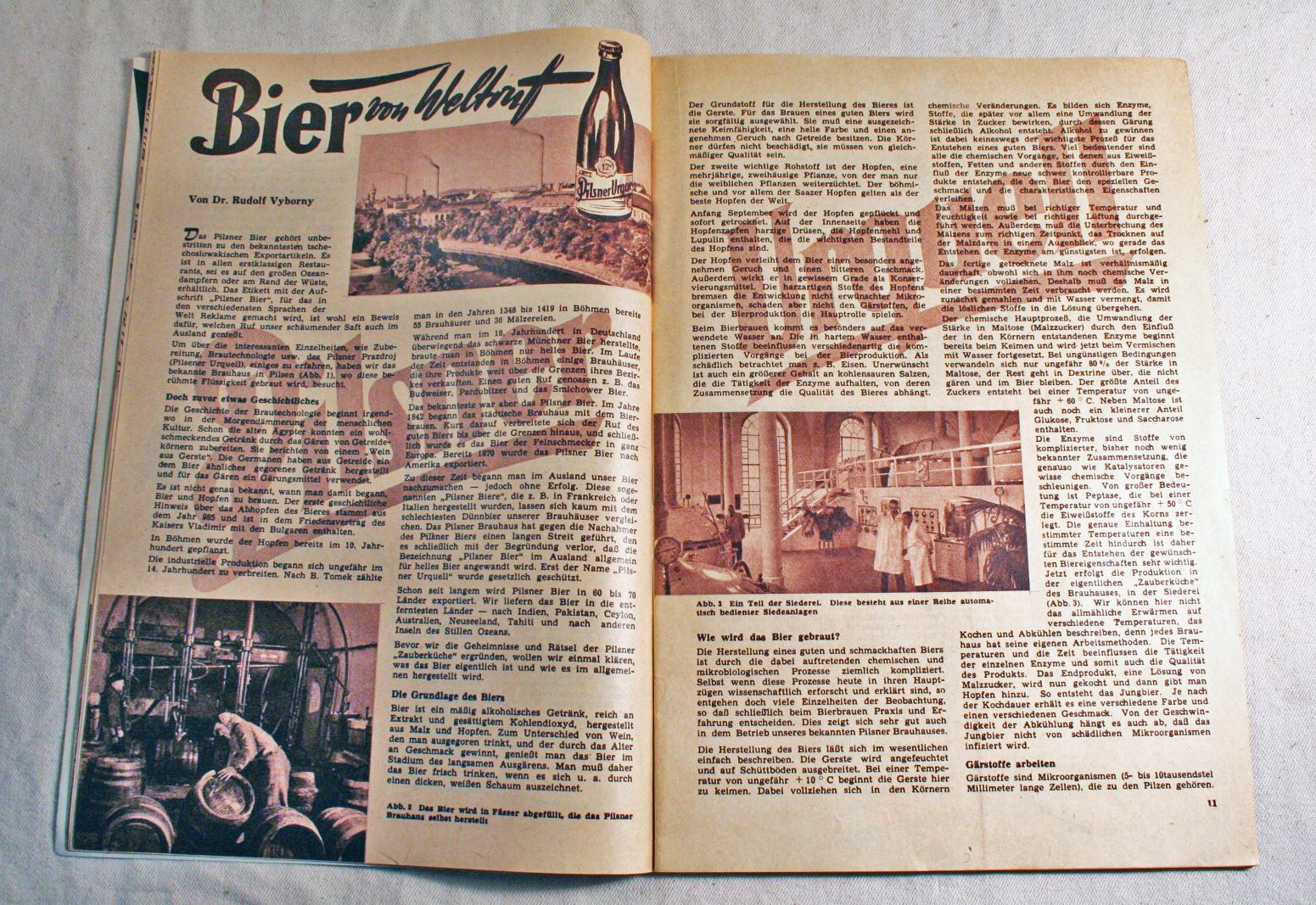
…automated beer technology!
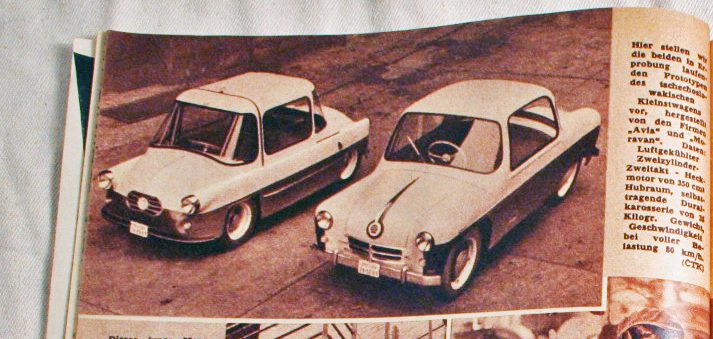
…Kleinstwagens! (Tiny cars!)
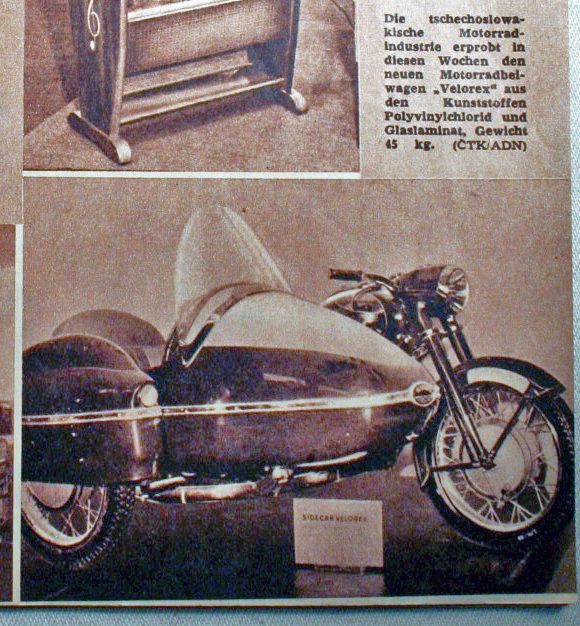
…Motorrads!
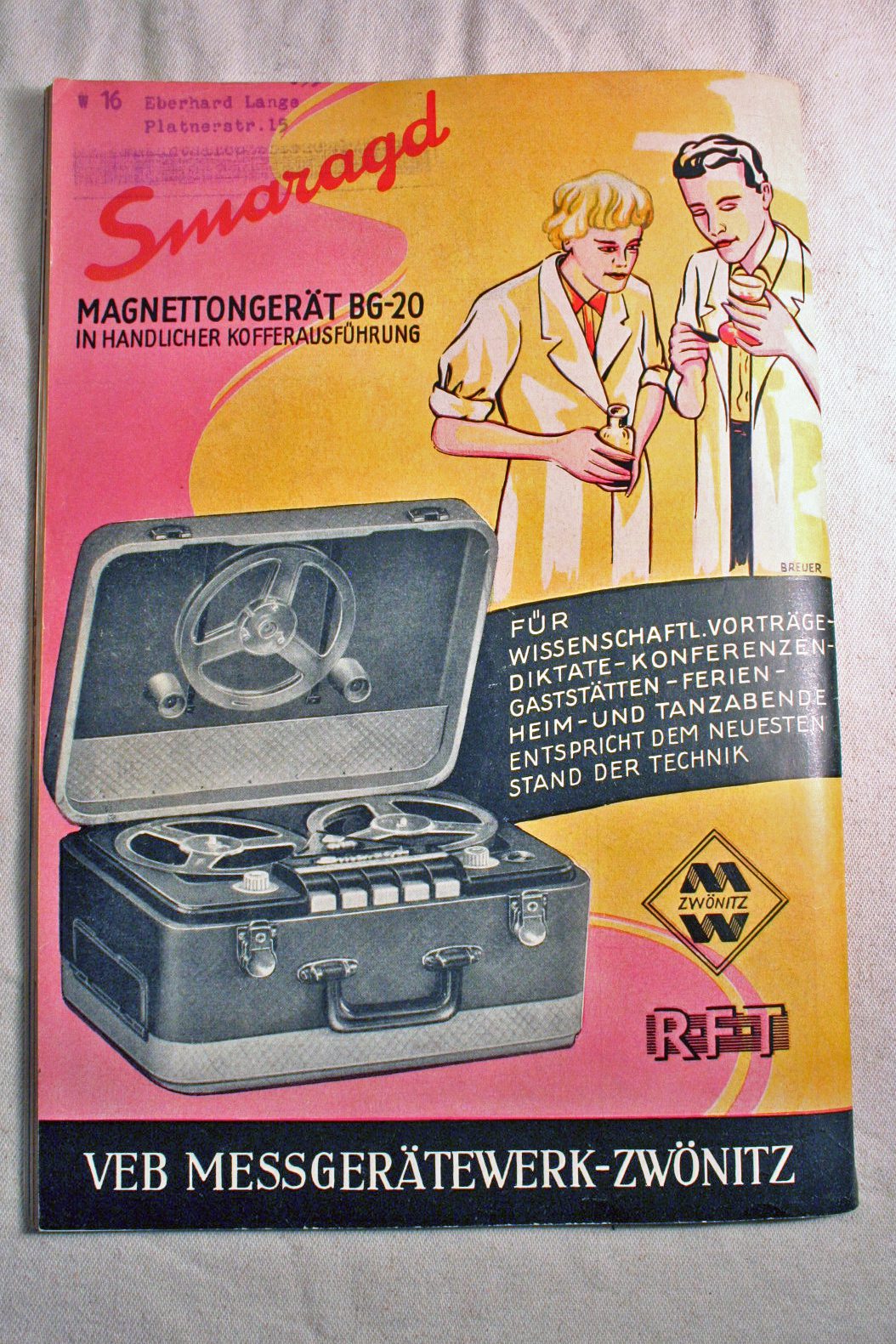
…sound technology advertisements!
J&T #7 & the before & after #8
And…life extension! Who knew! As this article hints, in the mid-20th century, the Romanians, under the leadership of Dr. Ana Aslan of the Geriatric Institute in Bucharest, were at the forefront of the new sciences of gerontology and geriatrics. As such, Dr. Aslan and her colleagues were asking questions such as: is aging a disease? Can it be “cured”? Can humans live to be 100? 140? Would they want to?! [The Americans didn’t clearly articulate, or at least popularize, similar ideas until the 1970s (see Joel Kurtzman and Philip Gordon’s No More Dying. The Conquest of Aging and the Extension of Human Life from 1976, and Saul Kent’s The Life Extension Revolution from 1980).] And what did Dr. Aslan’s research suggest? Chiefly, that injections of Novocain (a.k.a. “Vitamin H3”) could not only retard, but even reverse aging! Apparently, her assertions were good enough for Charles de Gaulle, John F. Kennedy, Mao Zedong, Ho Chi Minh, Marlene Dietrich, Charlie Chaplain and Salvador Dali, to name just a few of the eminent folks who made their way to Dr. Aslan’s clinic. A more skeptical age might wonder at the validity of her research, but a quick Google search of “life extension” in June of 2011 generated 14,500,000 hits, most of which appeared to be selling “nutritional supplements,” “vitamins,” “hormones” and a host of other products designed to “increase strength and endurance,” “enhance” one’s brain, or otherwise make one fabulously slim and long-lived.