

Outer Space
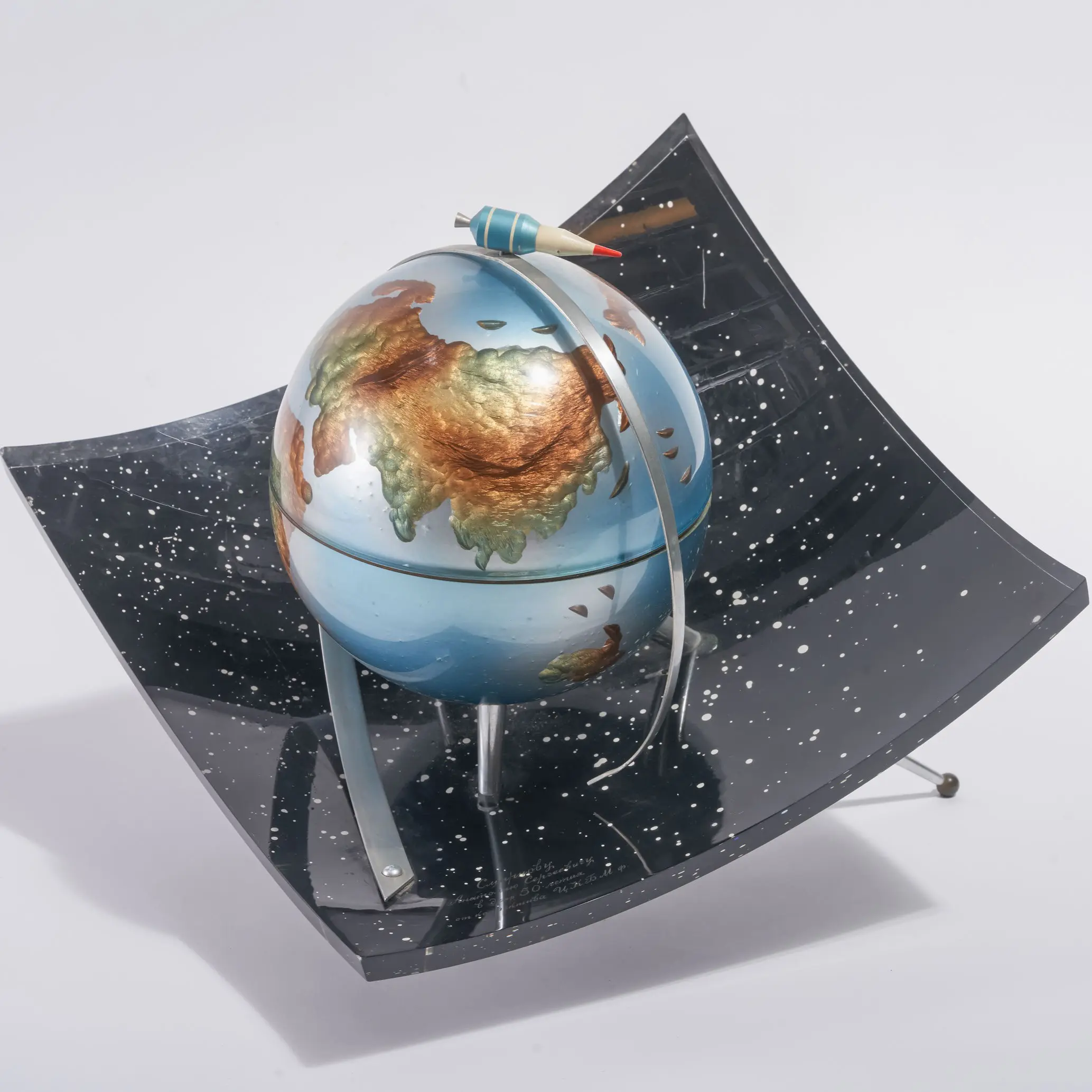
The Space Race between the Soviet Union and the United States emerged as one of the most prominent competitions during the Cold War-era. Outer space transformed into an arena for these two global superpowers to compete for supremacy as it related to rocketry, flight, and space exploration. The first artificial satellite orbiting Earth (Sputnik 1, 1957), the first space dog (Laika, 1957), the first manned space flight (Vostok 1, manned by Yuri Gagarin, 1961), the first woman in space (Valentina Tereshkova, 1963), the first spacewalk (Alexei Leonov, 1965), and the first man on the Moon (Neil Armstrong, 1969) define some of the pivotal moments of the Space Race. These large milestones were represented in art and pop culture and commemorated through souvenirs and decor. The Wende Museum holds a large collection of materials from the Soviet Union and other Socialist countries that participated in and celebrated the accomplishments of state space programs and cosmonauts.


