


This talk will focus on two films made in Soviet Uzbekistan in the early 1930s: the 1931 fiction film, Her Right (Uning Huquqi / Её право), directed by Grigorii Cherniak, and the semi-documentary film, Arabi (1930), directed by Nina Zubova, to think about the relationship between gender, nature, ecology, and Soviet power.
Lilya Kaganovsky is Professor of Slavic, East European and Eurasian Languages and Cultures and Affiliate Professor in Film, Television and Digital Media at UCLA. She specializes in Soviet and post-Soviet cinema, focusing on questions of gender and ideology. Her publications include How the Soviet Man was Unmade (Pittsburgh, 2008), The Voice of Technology: Soviet Cinema’s Transition to Sound, 1928–1935 (Indiana, 2018), and three co-edited volumes: Arctic Cinemas and the Documentary Ethos (2019); Sound, Speech, Music in Soviet and Post-Soviet Cinema (with Masha Salazkina, Indiana, 2014), and Mad Men, Mad World: Sex, Politics, Style and the 1960s (2013). Her research has been supported by the American Council of Learned Societies, the Social Science Research Council, the National Endowment for the Humanities, and the Mellon Foundation. She is currently working on a book on Soviet women’s cinema: Amazons of the Soviet Avant-garde: Early Women Filmmakers in the USSR.
A Q&A follows the talk, and the afternoon concludes with a reception in the garden.
The program takes place in the A-Frame Theater at the Wende Museum. Seating is first come, first served.
Presented in partnership with the UCLA Center for European and Russian Studies.
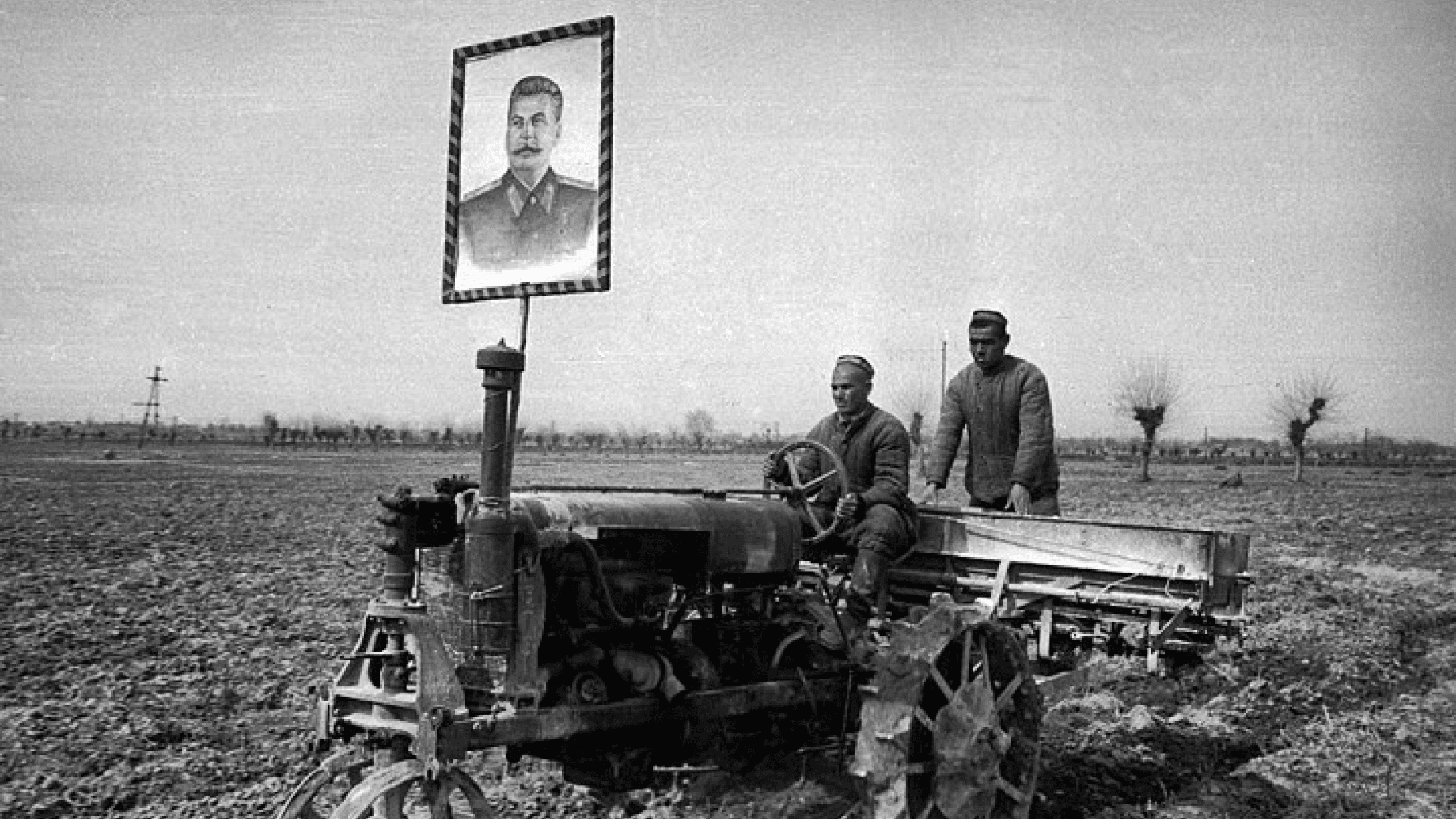
Image: Tractor Operators In A Field. A tractor in a field with Stalin’s portrait, circa 1940. Photo by Max Penson/Getty Images.